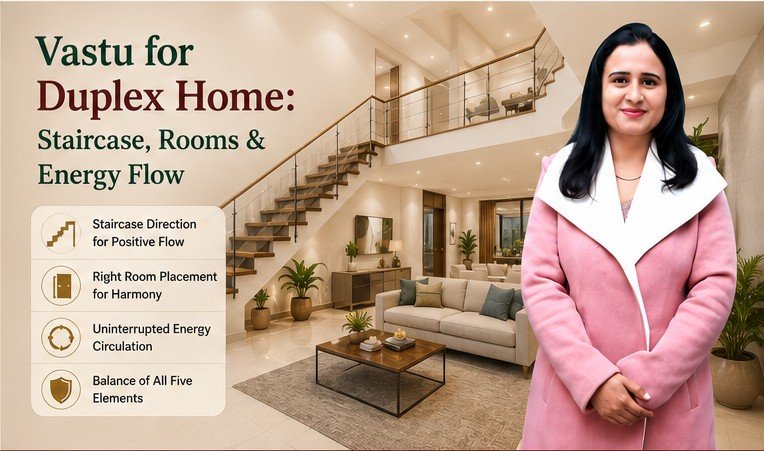
Vastu for Duplex Home: How Two Floors Change the Rules

Acharya Nehha
Vastu ExpertA duplex home has energy considerations that a single-floor home doesn't. When you add a second floor, you're layering two distinct zones of energy on top of each other — and how you connect them (through the staircase) matters as much as how you plan each floor individually.
Ground Floor: The Active Zone
In Vastu, the ground floor should be where your active, public-facing spaces live. This means the living room, dining area, kitchen, and if you have guests regularly, a guest bedroom. The energy on the ground floor is more externally connected — it's the zone of interaction, movement, and daily activity.
Kitchen should follow the standard rule: South-East corner of the ground floor. If the kitchen is already built elsewhere, the direction you face while cooking matters most — face East. The living room belongs in the North or North-East zone of the ground floor, and the dining area is best placed West of the kitchen.
An important rule for duplex homes: do not place a pooja room on the ground floor if there's a bedroom directly above it. A prayer space with a bedroom ceiling above it is considered inauspicious in Vastu — it implies the sacred is below the profane. If your floor plan has this configuration, move the pooja area to the upper floor's NE corner instead.
Staircase: The Energy Connector
The staircase is one of the most important elements in a duplex from a Vastu perspective. It's the channel through which energy moves between floors, and its placement can either support or disrupt the entire home's flow.
The best positions for a duplex staircase are South, South-West, or West. These are the heavier, more stable zones — appropriate for the structural weight of a staircase. The South-West staircase is particularly stable and grounding.
What you absolutely want to avoid is a staircase in the North-East corner. The NE is the Ishanya zone — the lightest, most spiritually connected corner of the home. A staircase here blocks and disrupts this energy severely. I've visited duplexes where this single issue was creating persistent financial and health difficulties for the family, and the correlation was clear once we looked at the floor plan.
The staircase should wind clockwise when ascending (left to right as you go up). Steps should ideally be in odd numbers — 15, 17, 19, 21. Never end on a step count that divides by 10.
Share your floor plan — Acharya Nehha will check staircase placement, floor zoning and energy flow across both levels.
WhatsApp Your Floor Plan Book Consultation
Upper Floor: The Private Zone
The upper floor is where your private, restful spaces belong — bedrooms, personal study areas, and a family lounge if you have one. The energy on the upper floor should be calmer and more inward-facing.
The master bedroom on the upper floor should be in the South-West zone — directly above the heaviest part of the ground floor. This alignment of weight creates a grounding, stable anchor for the entire duplex. The head of the bed in the master should face South.
One thing to watch: overhead water tanks. In duplex homes it's common to have a water tank on the terrace or roof. This tank should never be positioned directly above the master bedroom or the prayer space. North or North-East of the roof is the ideal position for a water tank, but if it's over the SW (master bedroom), that's a common issue I address in consultations with specific remedies.
For a complete assessment of your duplex including room-by-room direction mapping, our home Vastu consultation covers everything with an on-site or digital floor plan review.
At Prestigious Vastu, we assess duplex homes with full two-floor analysis — staircase placement, floor zoning, water tank position and room assignment.
Book Your Duplex AssessmentFrequently Asked Questions
Common questions answered clearly.