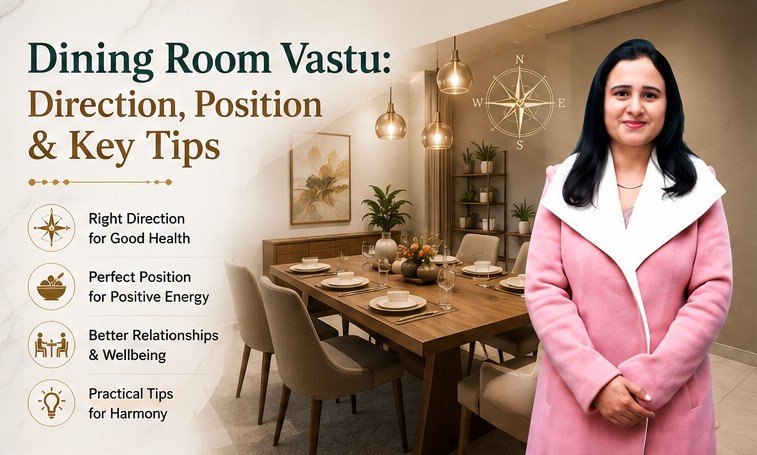
Dining Room Vastu: Why Where You Eat Matters
Acharya Nehha
Vastu ExpertWhere you eat affects more than your digestion — it shapes the nourishment energy of your entire household. Vastu has clear guidance for the dining room, from its ideal location in the home to the direction you should face while eating. These aren't arbitrary rules; they're about aligning the act of nourishment with the right energetic zones.
Where Should the Dining Room Be?
The ideal location for a dining area is West of the kitchen. If the kitchen is in the South-East (as it should be), the dining room in the West or North-West is a natural extension — food moves from the fire zone (SE kitchen) to the nourishment zone (West dining). This is considered a smooth, supportive energy flow.
East of the kitchen also works well — many traditional homes in India have this configuration. What you want to avoid is the dining room being at the far end of the home from the kitchen, requiring food to travel across multiple zones before it reaches the table. That disconnection affects the freshness of both the food and the energy that comes with it.
In apartments where the kitchen and dining are in a combined open space, the dining table should be placed on the West or NW side of that combined area, with the cooking zone occupying the SE.
Direction While Eating
This is one of the details most people overlook, and it's one of the easiest to fix. Face East while eating — this is the direction associated with health, vitality, and solar energy. East is the direction of the rising sun, and eating while facing East is believed to support digestion, energy levels, and overall health.
North is the second best option — it's associated with wealth and growth, which makes it appropriate for mealtimes that are also family connection times. Avoid facing South while eating regularly — South is associated with endings and heaviness.
The head of the family ideally sits facing East or North. If the table is long, the seating arrangement can be organised so that the eldest or most senior person faces East, with others sitting accordingly.
Share your floor plan — Acharya Nehha will advise on positioning, direction and table arrangement.
WhatsApp Acharya Nehha Book Consultation
The Dining Table and Mirrors
Square or rectangular dining tables are preferred. Glass-topped tables with metal bases are not ideal — Vastu associates the dining table with abundance and nourishment, and these need a grounded, earthy quality. Wood is the best material. If you have a glass table, placing a wooden placemat or a wooden table runner makes a practical difference.
One of the most auspicious things you can add to a dining room is a mirror that reflects the dining table. This is a traditional Vastu principle — a mirror that reflects food is believed to double the abundance of the household. Place the mirror on the North or East wall of the dining room, positioned so it reflects the table and the food on it.
Keep the television out of the dining area. Mealtimes should be family connection times — distraction-free eating is both a Vastu principle and genuinely better for digestion and family harmony. I consistently notice that homes where meals are eaten together without screens have a warmer, more cohesive energy overall.
For kitchen placement and cooking direction that supports your dining area, read our guide on kitchen Vastu rules and our home Vastu consultation page.
At Prestigious Vastu, we assess dining room placement, table arrangement and the kitchen-dining energy flow as part of every home consultation.
Book Your Home ConsultationFrequently Asked Questions
Common questions answered clearly.